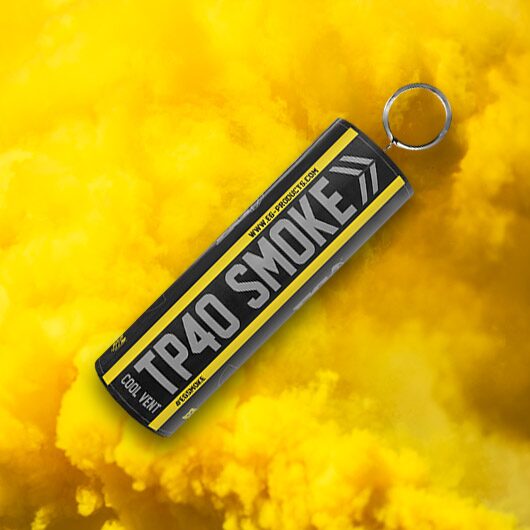
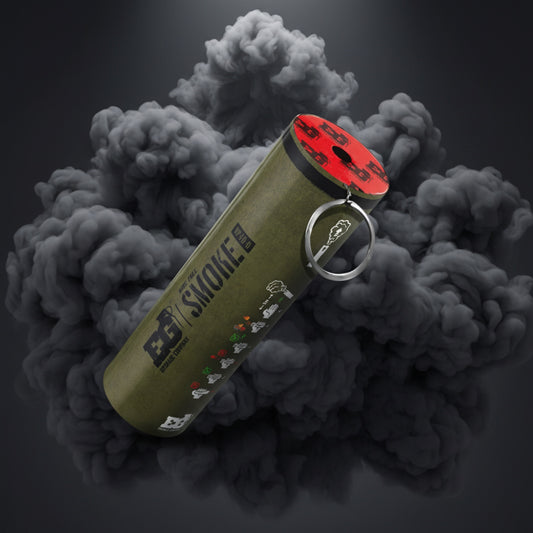
Compare colored smoke bombs for outdoor portraits, engagement sessions, senior photos and video. TP40 and WP40-D provide approximately 60 seconds of smoke; the compact EG25 provides approximately 25 seconds per device. Choose a model by duration, ignition and current color availability.
How Do Professionals Use Smoke Bombs for Photography?
Set focus, exposure and framing before activation. Choose a smoke color that contrasts with the background, then rehearse the subject's pose and operator's cue without smoke.
Use fully open outdoor locations with permission. An adult operator should follow the model-specific printed label for activation, placement and distances. Do not hold a device while it produces smoke.
Keep people, animals, vehicles and valuable surfaces clear of the device and plume. Wind changes the shape and direction of smoke; cancel or move the setup if the plume would reach people, roads or neighboring property.
Who Uses Smoke Bombs for Photography?
Teams and creators across these fields rely on colored smoke for Photography sessions:
Portrait Photographers
Wedding Photographers
Engagement & Couples
Senior & Grad Sessions
Maternity Photographers
Automotive & Editorial
Fashion Shoots
Music Video Production
Boudoir & Fine Art
Real Estate (drone b-roll)
Which Smoke Bombs Work Best for Photography?
TP40 Top Pull: approximately 60 seconds of colored smoke with top-pull ignition. A starting point for outdoor portrait and video takes.
WP40-D Wire Pull: approximately 60 seconds of colored smoke with side wire-pull ignition. Check the product page for available colors.
EG25 single or 10-pack: approximately 25 seconds of smoke per device. Choose for short takes and color experiments.
Gender Reveal WP40: approximately 90 seconds of pink or blue smoke with discreet labeling, for an outdoor reveal sequence.
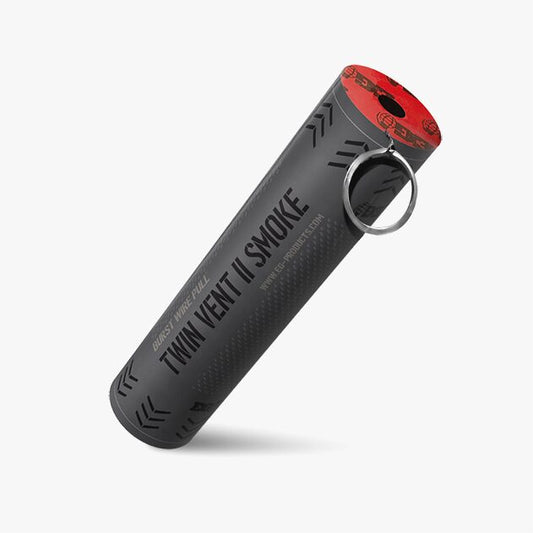
Standard WP40 and Twin Vent II are currently sold out. Check product pages for current availability and follow the instructions for the model you buy.
FAQ
Frequently Asked Questions About Photography Smoke Bombs
Which smoke bomb is best for outdoor portrait photography?
+
Start with TP40 or WP40-D for approximately 60 seconds of smoke. TP40 uses top-pull ignition; WP40-D uses wire-pull ignition. EG25 provides approximately 25 seconds for shorter takes. Check the product page for color availability.
Do colored smoke bombs stain clothes during photo shoots?
+
Yes, colored smoke can leave residue or stains. Keep the device and plume away from clothing and valuable surfaces. Follow the printed product label and do not assume stains will wash out.
What camera settings work best for smoke bomb photos?
+
Set focus and exposure before activation. For a static outdoor portrait, f/2.8–f/4 and a shutter speed of at least 1/250 second can be a starting point; adjust ISO, aperture and shutter speed to the light and subject movement. Review a test frame before using smoke.
Can smoke bombs be used indoors for photography?
+
No. Use fully open outdoor locations only. Never use indoors, in garages, barns or enclosed venues, regardless of ventilation or venue permission.
How far back should subjects stand from the smoke bomb?
+
Follow the model-specific printed label and safety sheet for minimum distances and placement. Keep subjects outside the operating area and out of the plume. Do not hold a device while it produces smoke.
Which color smoke bomb reads best on camera?
+
Choose contrast with the background: dark smoke against a lighter background, or white smoke against a darker background. Compare the product photos and match the color to your clothing and location; lighting changes the result.
Are smoke bombs allowed at wedding venues?
+
Permission varies by venue and local rules. Get approval before ordering and check current fire restrictions. Smoke bombs are pyrotechnic devices and do not bypass a venue's fireworks or pyrotechnics ban.
How many smoke bombs do I need for an engagement shoot?
+
Plan one device for each intended take, plus a test and backups. The number depends on locations, colors, repeated takes and wind. Rehearse without smoke so the effect is not used up during setup.